

The Straits Times (ST), a newspaper of record in Singapore, published an article on Saturday (Apr 26). The article intended to profile Singapore’s furry community.
But the article created significant repercussions both locally and overseas. Admins of Singapore’s primary furry community, Singapore Furs (SGFurs), faced backlash.
A public document, released Friday (May 16) by Singapore furry Teryx on his Facebook page, claims to be written by a collective of Singaporean and Malaysian furs, along with anonymous sources. Others — including some of the document’s named contributors — shared the document too.
The document raised concerns about privacy, the public wrongly seeing the furry community as the same as LGBT people (lesbian, gay, bisexual, and transgender – also called LGBTQ+), and choices made by SGFurs leaders before the article was published.
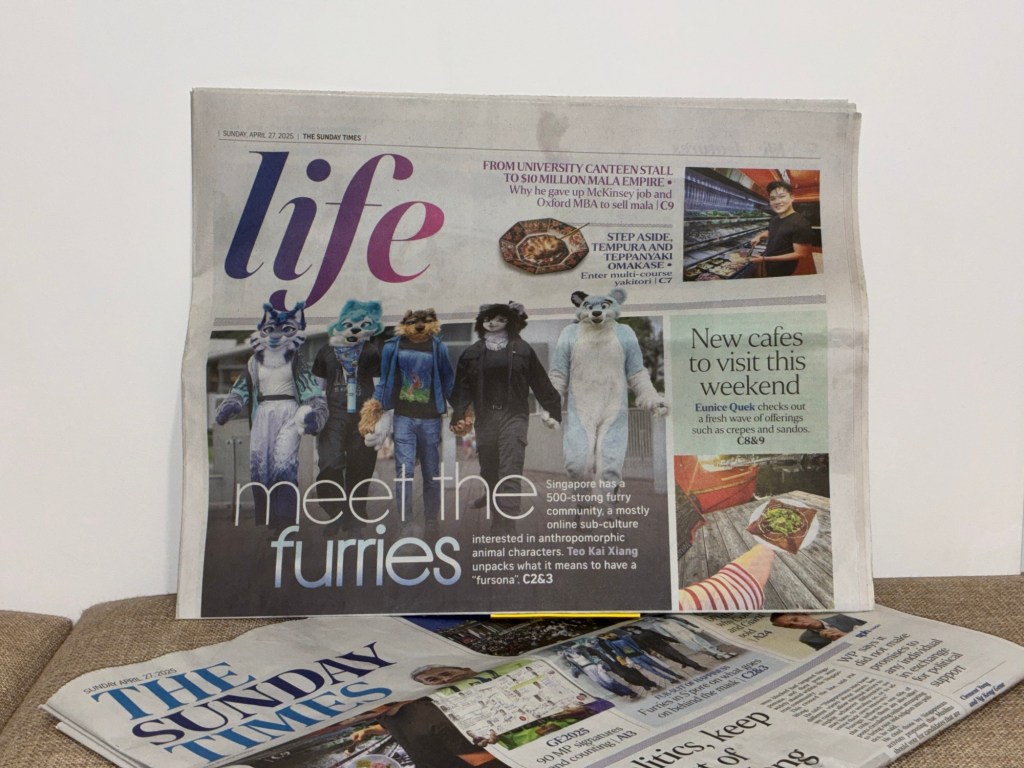
Article misled public perception: furries
The document quickly circulated online, fueling debate among furries from Singapore and the Asian region. Many of the critics are LGBT themselves.
They say the article gave the false impression that “being furry means being LGBT.” In regions where LGBT identities are criminalised, this can pose serious risks — from public harassment to legal penalties under religious law.
Illustrations are a focal point of the community, which helps those who are LGBTQ+ or neurodivergent, or who struggle with in-person connection, come together without words.
– Excerpt from the ST article “A furry cure for loneliness: ‘It’s like socialising on easy mode’“
Many furries now hide furry-related items and avoid public discussions about their involvement. They fear damage to family ties, professional reputations, and personal safety. Some say the community no longer feels like a “safe space.”
These concerns are not new. In 2024, content creator Templar Niko interviewed attendees at Malaysian furry convention Furs Upon Malaysia (FurUM). Their crew do not possess attendee tickets. GFTV understands FurUM did not give them permission to interview attendees.
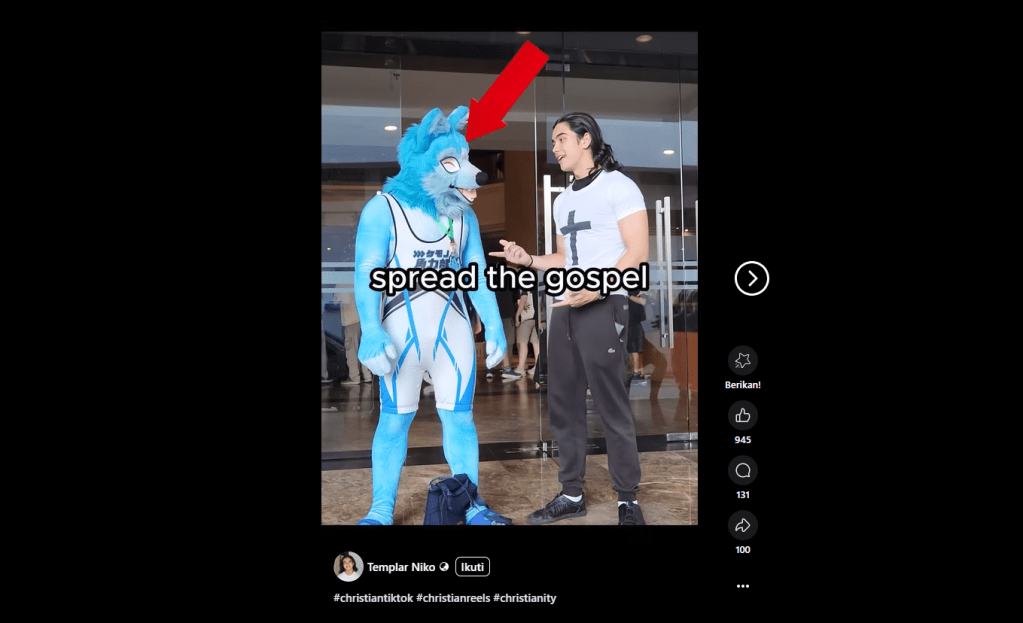
Rejecting the idea that “furries = LGBT”
After publication, many furries criticised the article’s author, Teo Kai Xiang. They focused on how Mr. Teo framed the furry community in the context of LGBT identities.
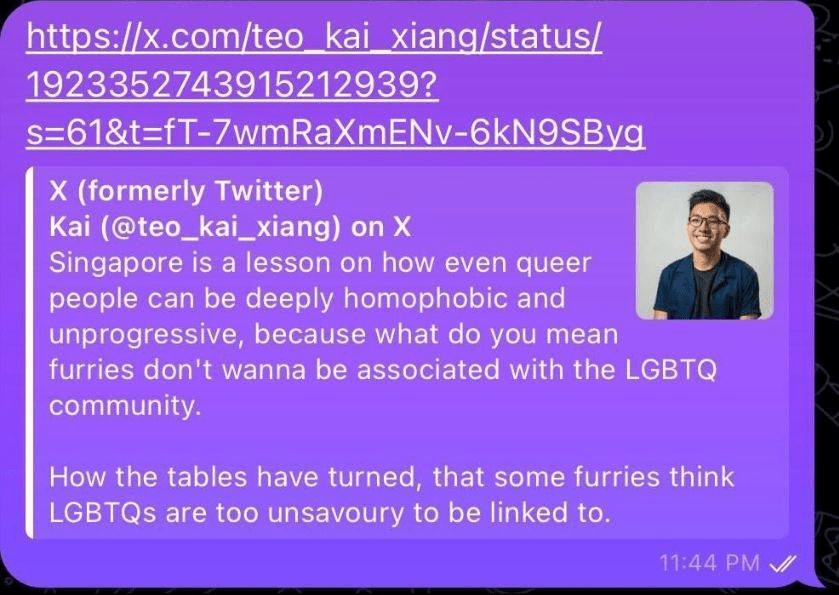
On Friday (May 16), Mr. Teo wrote a tweet amid the backlash. He later deleted the post.
“Singapore is a lesson on how even queer people can be deeply homophobic and unprogressive, because what do you mean furries don’t wanna be associated with the LGBTQ community.
How the tables have turned, that some furries think LGBTQs are too unsavoury to be linked to.”
– Kai @teo_kai_xiang on X, 16 May 2025
Many furries — including LGBTQ members — found this offensive. They argued that the fandom is about creativity, expression, and freedom — not solely LGBTQ identity. One put it simply: “Furry and LGBTQ identities aren’t mutually exclusive.”
Some accused Mr. Teo of using the community as a “political pawn” for a “personal agenda.” Others questioned whether his identity as an openly queer person influenced the article’s framing.
Critics also blamed SGFurs leaders who helped arrange the interviews. Some felt blindsided, calling them “naïve” or even “complicit.”
So far, neither Mr. Teo nor ST publicly responded to the community’s backlash.
Debate ensues on handling the aftermath
Furries — especially those in SGFurs — are now debating how to handle the surge of public attention. Opinions remain divided.
Sources close to the organisers said one SGFurs member got in touch with Mr. Teo. A senior figure knew what was happening but didn’t take part in the planning. They chose which members to speak in the article. The plans stayed quiet until the story came out.
GFTV understands both the member and senior figure stood by their choice. They said the goal was to “counter stigma” and “raise visibility for a misunderstood community.” They admitted it was a big risk.
Still, they felt it was a necessary step to unite the community and show its growth. Despite the pushback, they hope this will lead to “clearer, more accurate stories — told by the community itself”.
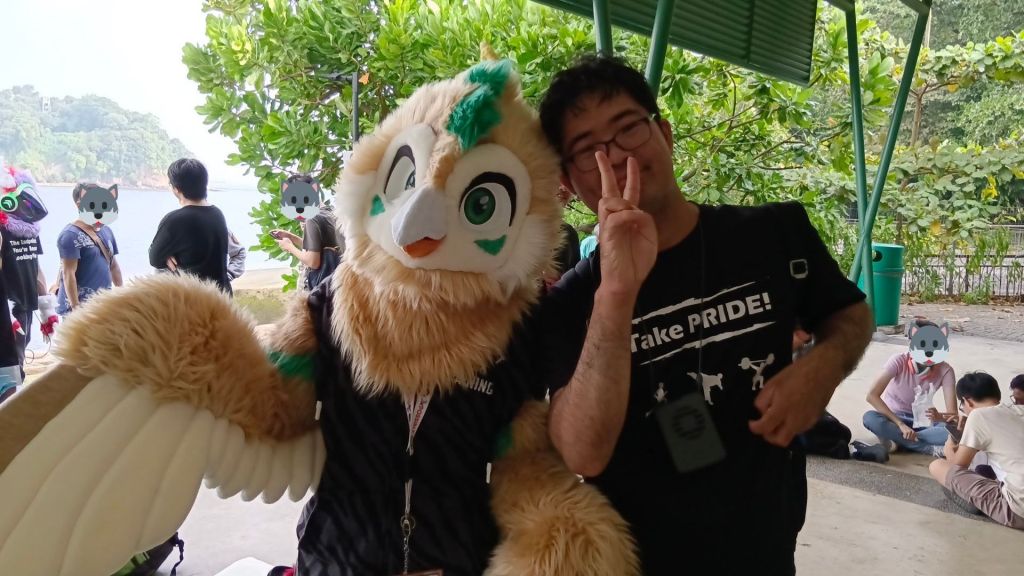
This view sharply contrasts with accounts from furries who said they were caught off guard by the article’s release. Some reported scrutiny from peers or family members.
GFTV understands that when SGFurs members reached out to ST, the community was not notified. People criticised the admins for not consulting the community beforehand.
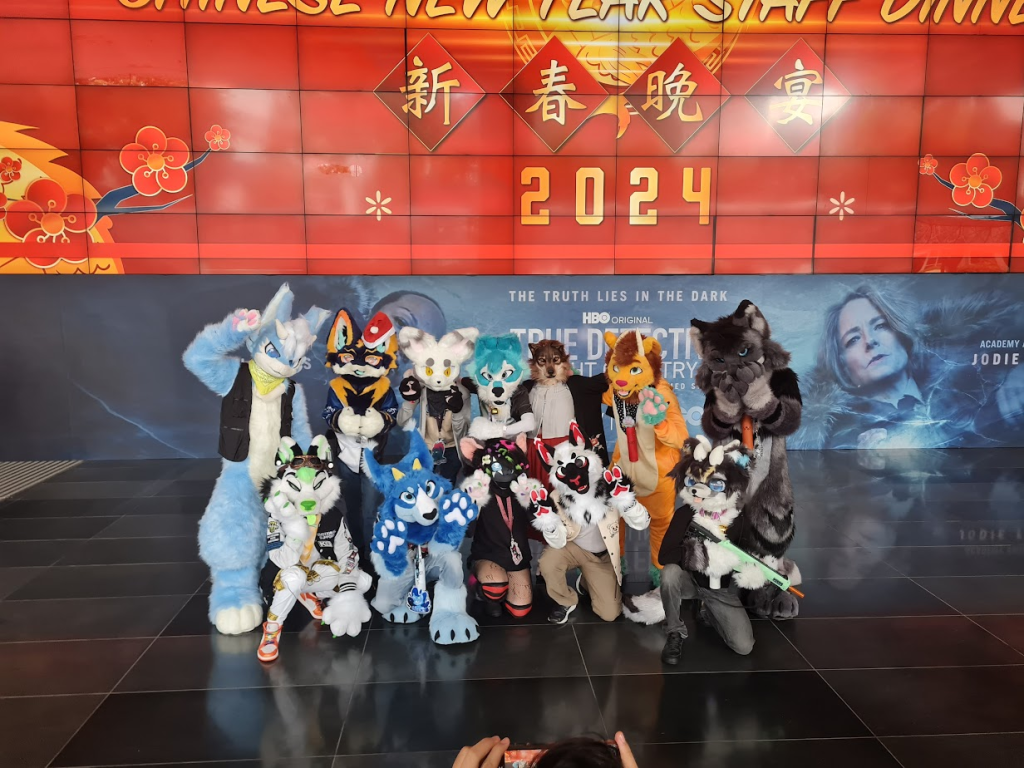
On 26 May 2025, around two weeks after the initial incident, a statement addressing the situation was circulated within SGFurs’ private community spaces by a senior community administrator. The statement was not released publicly.
Separately, GFTV understands that the SGFurs individual who coordinated the Straits Times article subsequently took a hiatus of approximately one month.
In the months following the incident, GFTV continued to receive feedback from SGFurs community members indicating that the situation had negatively affected community dynamics.
These accounts are qualitative and private. In line with GFTV’s News Standards, they are not treated as evidence unless their sources have made their views public.
Furries maintain caution toward public media
This incident shows that furries still aren’t sure how to deal with public media.
The furry fandom started in the United States. In the early days, some members acted poorly in public. This hurt the fandom’s image. American mass media then made sensational stories showing furries in a bad light.
Those stories had real effects. Some furries lost jobs or faced problems in their personal lives. The bad image stuck; politicians and others used it against them. For years, many furries avoided the media entirely.
Today, things are changing. The fandom is more accepted. Some furries now want to speak up and change how people see them.
But many still don’t trust the media and prefer to keep a low profile. The fear of being misrepresented hasn’t gone away.
Editor’s note
This article was updated on 1 February 2026 at 10:40 AM (SGT) to include additional context following developments after the original publication.
新加坡《海峡时报》报道引发当地兽迷社群震荡
新加坡权威媒体《海峡时报》4月26日刊发兽迷专题报道,却在新马地区乃至海外引发强烈反响。新加坡主要兽迷社区 “SGFurs” 管理员因此遭受舆论冲击。
5月16日,新加坡兽迷 Teryx 在 Facebook 发布联合声明文件,署名作者包括新马两地兽迷及匿名人士。该文件同时被多人转发,包括文档中具名的部分作者。
文件质疑报道侵犯隐私、误导公众将兽圈等同于 LGBT 群体(LGBT 指性少数群体,包括同性恋、双性恋、跨性别等),并批评 SGFurs 管理层在报道前的决策。
被误导的公众认知
这份声明在亚洲兽圈引发激烈讨论,许多批评者本身即为 LGBT人士。
他们指出报道营造了”兽圈即 LGBT “的错误印象——在那些 LGBT 身份非法的地区,这可能招致从骚扰到宗教法惩处的风险。
“兽文化艺术让 LGBTQ+ 群体、神经多样性者及社交障碍者获得无言的联结”
——摘自海峡时报报道《治愈孤独的兽迷:像在简单模式社交》
“A furry cure for loneliness: ‘It’s like socialising on easy mode’“
目前许多兽迷开始隐藏相关兽文化周边并回避公开讨论,担忧家庭关系、职业声誉与人身安全受损。有人表示社群已失去”安全空间”的质感。
此类争议早有先例。2024年,内容创作者 Templar Niko 曾在马来西亚兽展 Furs Upon Malaysia(简称FurUM)未经许可采访参会者。据国际兽视(GFTV)了解,其团队未持有入场门票,FurUM 主办方也未曾授权其进行采访。
“兽圈 ≠ LGBT”的立场之争
报道刊发后,众多兽迷对作者张凯翔(音译,英文名:Teo Kai Xiang)提出批评,质疑他故意将兽圈与 LGBT 身份强行关联。
5月16日(周五),张凯翔在舆论风波中发布推文,但随后将其删除:
“新加坡情况表明,即便是性少数群体也会存在恐同和思想倒退。
为何兽迷们急于与 LGBTQ 划清界限?
局势反转,如今部分兽迷认为与LGBTQ关联会影响自身形象。”
——张凯翔(@teo_kai_xiang)2025年5月16日发于X平台
许多兽迷,包括 LGBT 人士,认为该言论充满冒犯。他们强调兽文化的核心在于创意、表达与自由,而非单一的 LGBT 身份认同。有兽迷直言:“兽迷身份与 LGBTQ 身份本就不互斥。”
部分人士指责张凯翔将兽迷当作其“个人政治的棋子”,另有人质疑其公开的酷儿(queer)身份是否影响了报道倾向。
矛头同时也指向协助安排采访的社群管理层。有成员称被“蒙在鼓里”,直指管理层“天真”甚至“共谋”。
截至发稿,张凯翔与《海峡时报》均未就社群反弹作出公开回应。
后续处理的分歧
兽迷群体,尤其是 SGFurs 社区成员,正就如何应对骤增的公众关注展开激烈讨论,意见严重分化。
知情人士透露,确实有 SGFurs 成员主动联系了记者张凯翔。虽然社群高层知情,但并未直接参与策划。报道的受访者都是经过内部挑选的,整个过程直到报道公开保密。
据国际兽视了解,决策者辩称这是”破除污名化”的必要冒险。
他们视此为团结社群、展示发展的必要举措,尽管遭遇反弹,仍希望促成”由社群自主讲述的更清晰、准确的故事”。
但更多成员表示对突然被曝光感到不安,部分人也遭亲友盘问。
据国际兽视了解,许多 SGFurs 成员完全不知道会有这篇报道,有些人因此批评管理层没有征求整个社群的意见。
2025 年 5 月 26 日,距离事件发生约两周后,社群高层一名管理员在 SGFurs 的私人社群空间内发布了一则说明声明。该声明并未对外公开发布。
另外,国际兽视了解到,负责协调《海峡时报》相关文章的 SGFurs 成员,随后暂时离开社群事务约一个月。
在事件发生后的数月里,国际兽视持续收到来自 SGFurs 社群成员的反馈,表示该事件对社群运作与互动氛围造成了负面影响。
这些反馈属于定性、私下的意见。根据国际兽视《新闻报道标准》,在相关当事人未自行公开表态之前,这些内容不会被视为可作为新闻证据的材料。
兽迷与媒体的信任危机
这起事件表明,兽迷们至今仍不确定该如何面对大众媒体。
源自美国的兽迷文化早期有些成员在公开场合行为不当,损害了群体形象。美国当地媒体随后大肆渲染,将兽迷污名化。
此举伤害不小:有人因此失业,遭遇生活困扰。负面印象根深蒂固,甚至被政客利用。许多兽迷因此选择彻底回避媒体。
如今,随着社会接受度提高,部分兽迷开始主动发声,试图改变公众认知。
但大多数人仍不信任媒体,宁愿保持低调。因为被曲解的恐惧,从未消失。
更新说明
本文已于 2026 年 2 月 1 日 早上 10 时 40 分(新加坡时间) 更新,以补充原文发布后出现的相关背景说明。
 Global Furry Television